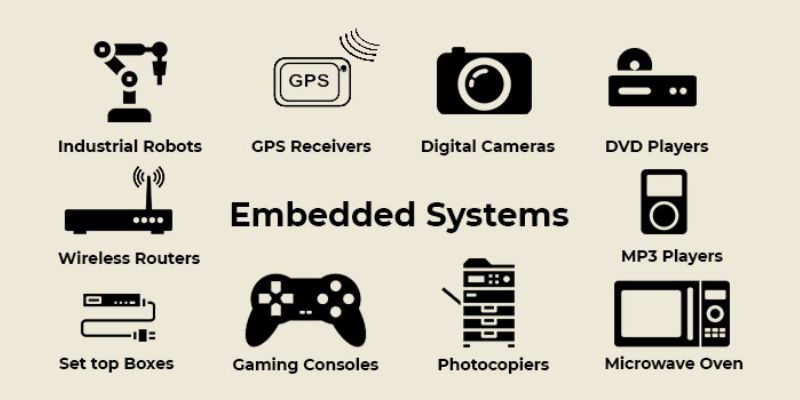
Embedded systemshave become the unnoticed backbone of contemporary technology, driving everything from smartphones and automobiles to medical devices and smart homes. Embedded system are optimized for specific tasks, with a focus on efficiency, reliability, and often real-time performance unlike general-purpose computers.
As industries increasingly embrace automation, IoT, and AI-driven solutions, embedded system continue to be vital for enhancing performance, safety, and user experience. This blog examines the ten most significant applications of embedded system in contemporary technology, emphasizing their influence on daily life and their role in fostering innovation across various industries. FITA Academy empowers learners with industry-relevant Embedded System skills, aligning microcontrollers, sensors, RTOS, and hardware–software integration with real-world embedded product development and industrial application requirements.
1. Embedded System in Consumer Electronics
One of the most prominent uses of embedded system is in consumer electronics. Smartphones, smart TVs, washing machines, microwave ovens, and wearable gadgets all use embedded controllers to ensure smooth operation. These systems manage functions such as processing touch input, controlling displays, overseeing power usage, and ensuring connectivity.
A smart TV, for instance, utilizes embedded system to stream content, manage applications, and process remote commands instantaneously. Wearable technology such as fitness trackers keeps track of heart rate, step count, and sleep patterns by means of built-in sensors and processors. Manufacturers can create devices with many features while keeping power consumption low and reliability high, thanks to the efficiency and compact design of embedded system.
2. Automotive System and Smart Vehicles
Modern cars and trucks are fundamentally computers on wheels, featuring dozens of integrated systems that collaborate. Electronic Control Units (ECUs) are responsible for managing essential functions like engine control, braking systems (ABS), airbags, and transmission control. Advanced Driver Assistance Systems (ADAS) utilize embedded systems for tasks such as lane detection, collision avoidance, and adaptive cruise control.
Embedded technology is also crucial for infotainment systems, GPS navigation, and climate control. With the rise in popularity of electric and autonomous vehicles, embedded systems are becoming increasingly crucial for sensor integration, real-time decision-making, and vehicle-to-vehicle communication, all of which are essential for road safety and efficiency. FITA Academy delivers Embedded System Courses in Chennai that focus on practical hardware and software integration, covering microcontrollers, embedded C, RTOS, and real-time project development aligned with current industry and product-based company requirements.
3. Healthcare and Medical Devices
Healthcare has been revolutionized by embedded systems, which allow for precise diagnosis, real-time tracking, and enhanced patient treatment. Medical devices like ECG monitors, infusion pumps, pacemakers, and imaging systems rely on embedded controllers for accurate functioning.
Wearable health monitors track vital signs like heart rate, blood pressure, and oxygen levels, transmitting this information to healthcare providers for continuous monitoring. In life-saving applications, reliability and accuracy are crucial qualities that embedded systems provide. As telemedicine and smart healthcare solutions have developed, embedded systems have continued to facilitate quicker diagnoses and improved treatment outcomes.
4. Industrial Automation and Manufacturing
In industrial settings, embedded systems drive automation, robotics, and process control systems. With minimal human intervention, sensors, actuators, and Programmable Logic Controllers (PLCs) collaborate to oversee and regulate machinery.
Embedded systems help optimize production lines, reduce downtime, and improve product quality by enabling real-time data processing and predictive maintenance. For example, sensors built into machines can detect wear and also notify operators before failures occur. Embedded Systems Training at a B School in Chennai can significantly enhance your technical career readiness and employability by strengthening hands-on hardware–software skills, problem-solving abilities, and industry-aligned embedded development expertise.
5. Internet of Things (IoT) and Smart Homes
IoT devices rely heavily on embedded systems to link physical objects with the internet. Smart home gadgets such as thermostats and voice assistants use embedded controllers to identify, process, and communicate data. While security systems detect motion and send immediate alerts, a smart thermostat adjusts the room temperature based on user preferences and environmental conditions. Embedded systems provide seamless connectivity, automation, and remote control, improving the energy efficiency, security, and convenience of homes for users.
6. Telecommunications and Networking Equipment
These systems are responsible for data routing, signal processing, error detection, and ensuring network security. In mobile networks, embedded processors manage functions like call processing, data transmission, and cell handover. With the expansion of 5G technology, embedded systems play a vital role in achieving higher data speeds, reduced latency, and extensive device connectivity, thereby ensuring dependable communication in contemporary networks.
7. Aerospace and Defense Applications
Because aerospace and defense systems require extreme reliability, precision, and real-time performance, embedded systems are essential. Aircraft utilize embedded systems for controlling flight, navigation, monitoring engines, and communication. In the military sector, embedded systems provide energy for radar technology, missile guidance systems, surveillance apparatus, and unmanned aerial vehicles (UAVs). These systems are required to function accurately and securely despite operating under severe conditions. Mission-critical operations are carried out safely and efficiently through the use of embedded technology.
8. Banking, Retail, and Smart Payment Systems
In contemporary banking and retail settings, embedded systems are crucial. Embedded controllers are essential for secure transactions in devices like ATMs, point-of-sale (POS) terminals, smart card readers, and vending machines. POS systems handle payments, oversee inventory management, and produce real-time sales reports. Embedded systems guarantee encryption, authentication, and rapid processing, resulting in secure and smooth customer experiences. As digital payments and contactless transactions become more prevalent, embedded systems are key to advancing innovation in financial technology.
9. Home Appliances and Smart Energy Systems
Refrigerators, air conditioners, washing machines, and ovens are examples of household devices that use embedded systems to enhance their performance and energy efficiency. Smart appliances can adjust their settings automatically according to usage patterns and environmental conditions. Embedded systems are crucial components in smart energy management systems, including solar inverters and smart meters. These systems track energy consumption, enhance power usage efficiency, and facilitate the incorporation of renewable energy sources, aiding in sustainable living and lowering energy expenses.
10. Future Technologies and Emerging Applications
Progress in artificial intelligence, machine learning, and edge computing is closely linked to the future of embedded systems. With Embedded AI, devices can handle data on-site, which minimizes latency and enhances performance. Emerging applications encompass smart cities, autonomous robots, agricultural automation, and wearable augmented reality technology. With the advancement of technology, embedded systems will increasingly become more robust, compact, and energy-efficient, fueling innovation across various sectors and molding the next generation of intelligent solutions. These are some basic structures of an embedded system that everyone should know.
Final Report
Embedded systems are the unseen engines propelling contemporary technology. Their uses span many fields, including consumer electronics, healthcare, automotive systems, and smart cities, and are ever-growing. Embedded systems facilitate the creation of more intelligent devices and interconnected settings by providing reliability, efficiency, and real-time performance. With the advent of automation and digital transformation in various industries, embedded system will continue to be central to technological advancement, influencing our lifestyles, work habits, and interactions with our environment.